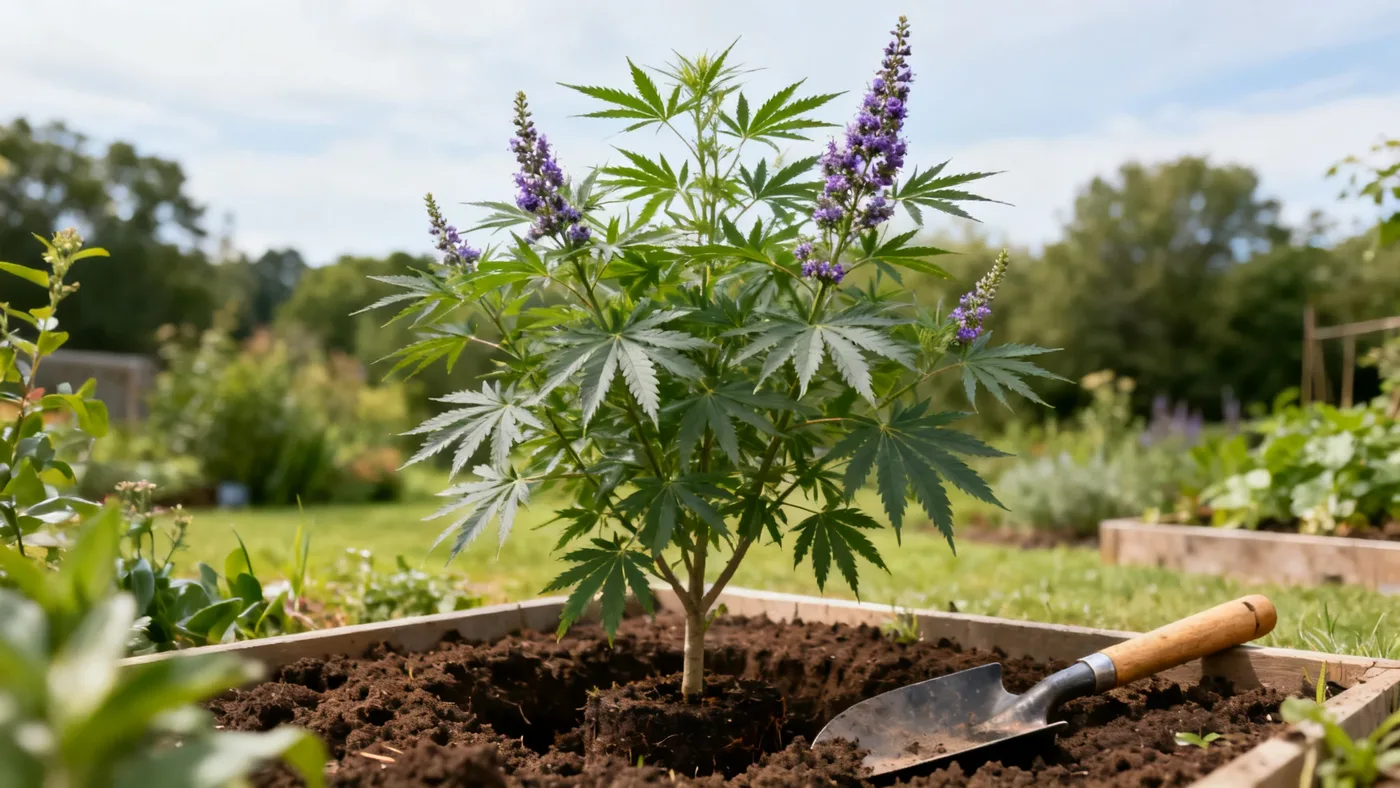
Shoal Creek Chaste Tree vs Butterfly Bush: Which to Plant?
Both Shoal Creek Chaste Tree and Butterfly Bush deliver months of luminous flowers and pollinator traffic. Both reach similar sizes. Both thrive in full sun and loose soil. But choosing between vitex vs butterfly bush matters more than it first appears, because one plant invades ecosystems and the other doesn't.
If you're weighing chaste tree or butterfly bush for pollinators, here's what actually differs: hardiness zones, cold recovery, invasiveness risk, bloom timing, and maintenance needs. A fair comparison will save you from planting an aggressive spreader if a better-behaved option fits your space.
Quick Comparison Table
| Attribute | Shoal Creek Chaste Tree (Vitex) | Butterfly Bush (Buddleja) |
|---|---|---|
| USDA Hardiness | Zones 6-9 | Zones 5-9 (varies by cultivar) |
| Mature Height | 10-15 ft (to 20 ft in ideal conditions) | 8-12 ft typical |
| Mature Width | 10-15 ft, often as wide as tall | 6-10 ft |
| Growth Rate | 2-3 ft per year | 2-4 ft per year |
| Bloom Time | May-September | June-September |
| Bloom Color | Lavender-blue to violet-blue | Purple, pink, white (cultivar dependent) |
| Invasiveness Risk | Moderate in SE US (self-seeding) | High (banned in some states) |
| Pollinator Value | Strong (bees, butterflies, hummingbirds) | Strong (bees, butterflies) |
| Drought Tolerance | High once established | High once established |
| Annual Pruning Needed | Yes (late winter/early spring) | Yes (hard pruning recommended) |
Hardiness: Where Each Thrives
Shoal Creek Chaste Tree is reliable in zones 6-9. In zone 5, it may die back to the ground each winter and regrow from the roots, though this behavior varies by site. In zone 10 and above, it won't perform well.
Butterfly Bush typically hardy to zone 5 (some cultivars to zone 4), making it the more cold-tolerant option if you garden in a colder climate. However, hardiness comes with a cost: in warmer regions where it doesn't winterkill, Butterfly Bush spreads aggressively via seed.
Size and Spread
Mature Shoal Creek Chaste Tree reaches 10-15 feet tall and equally wide in most growing zones, occasionally to 20 feet in ideal conditions (warmer end of its range, excellent drainage). Its growth rate is roughly 2-3 feet per year until it reaches mature size, which typically takes 3-5 years.
Butterfly Bush ranges 8-12 feet tall by 6-10 feet wide. It grows slightly faster (2-4 feet annually) but remains more compact overall. If space is tight, Butterfly Bush occupies less real estate, though both need 8-12 feet of spacing in mass plantings.
Bloom Time and Pollinator Appeal
Both are strong pollinator plants. Shoal Creek Chaste Tree blooms May-September and attracts bees, butterflies, and hummingbirds. Its flowers are lavender-blue to violet-blue, often with larger, more showy panicles than the species type. Deadhead spent panicles through summer to encourage a second flush of blooms.
Butterfly Bush blooms June-September, opening slightly later. Its color range depends on cultivar (purple, pink, white). Regarding chaste tree or butterfly bush for pollinators, both excel, but Shoal Creek has a longer bloom window and will rebloom more reliably if deadheaded.
Invasiveness: The Critical Difference
This is where the choice becomes serious. Butterfly Bush is considered invasive or potentially invasive in many states, particularly in the Pacific Northwest and increasingly in eastern regions. Some states have banned its sale. It self-seeds aggressively, escaping cultivation and colonizing disturbed areas, stream banks, and wild spaces. Once established outside your garden, it's difficult to eradicate.
Shoal Creek Chaste Tree also self-seeds and is flagged as potentially invasive in parts of the southeastern US, particularly Texas and along the Gulf Coast. However, its invasive behavior is less aggressive than Butterfly Bush's, and it's not yet banned in most states. If you garden in Texas or the Gulf region, check your local invasive plant list before planting either species.
In zones where neither self-seeds vigorously (cooler regions, or drier climates), invasiveness risk drops significantly for both.
Care Requirements: Pruning and Maintenance
Both plants bloom on new wood, so annual hard pruning in late winter/early spring is essential. For Shoal Creek Chaste Tree, prune before new growth emerges (typically late February to March in zone 6-8). Cut it back by one-third to one-half annually to maintain a fuller form and encourage denser flowering. If you skip pruning, the plant grows leggy and flowers thin out.
Butterfly Bush demands similarly aggressive pruning. Without it, it becomes sparse at the base and open-branched. Hard pruning (cutting back by half or more) is standard practice and necessary for a compact, full plant.
Both plants are light feeders. A single balanced fertilizer application in early spring is usually sufficient. Both tolerate poor, rocky soil, though well-drained soil is non-negotiable for both. Neither tolerates waterlogged or clay-heavy sites.
Pros and Cons: Shoal Creek Chaste Tree
Pros:
- Blooms reliably May-September with rebloom potential if deadheaded
- Lavender-blue flowers are a distinctive color in the landscape
- Strong pollinator and hummingbird draw
- Aromatic gray-green foliage adds textural interest (sage-like scent when crushed)
- High drought tolerance once established
- Moderate salt tolerance (useful near coastal areas)
- Deer resistant due to aromatic foliage
- Less invasive than Butterfly Bush in most regions
Cons:
- Requires regular, hard pruning to maintain shape and flowering
- May winterkill or die back in zone 5 and borderline zone 6 winters
- Winter dieback in colder zones means no winter interest or structure
- Self-seeds and can become invasive in SE US (particularly Gulf Coast and Texas)
- Slow to fill in during the first 2-3 years
- Needs full sun (6+ hours); flowering declines in part shade
Pros and Cons: Butterfly Bush
Pros:
- Hardy to zone 5, sometimes zone 4 (colder-region option)
- Blooms June-September, long season like Chaste Tree
- Wide color range available (purple, pink, white, bicolor cultivars)
- Compact to medium size; smaller footprint than mature Chaste Tree
- Fast-growing, fills in quickly
- Good pollinator plant
- Tolerates poor soil and dry conditions
Cons:
- Highly invasive; banned in several states
- Self-seeds aggressively, especially in warmer zones
- Difficult to eradicate once established outside your garden
- Requires hard annual pruning or becomes open and leggy
- Less distinctive color; purples and pinks are common in the landscape
- Winter interest is poor; deciduous with minimal branch structure appeal
Best for: Shoal Creek Chaste Tree
Choose Shoal Creek Chaste Tree if you:
- Garden in zones 6-9 with consistent winters
- Want a distinctive lavender-blue flower color
- Prioritize pollinator and hummingbird appeal
- Have a space that can accommodate a 10-15 foot wide specimen
- Are willing to prune annually for shape and continued flowering
- Garden in a coastal area (moderate salt tolerance helps)
- Want a plant that's less invasive than Butterfly Bush
- Prefer deer-resistant landscape plants
Best for: Butterfly Bush
Choose Butterfly Bush if you:
- Garden in zone 5 or colder and need cold hardiness Chaste Tree doesn't offer
- Want a specific flower color (pink, white, bicolor) that Chaste Tree doesn't provide
- Need a smaller shrub (more compact than Chaste Tree)
- Don't mind aggressive annual pruning as part of maintenance
- Garden in a region where it doesn't self-seed aggressively (colder climates only)
However, before choosing Butterfly Bush, verify that it is not on your state's invasive plant list. Many regions now discourage or prohibit its sale and planting due to ecological impact.
The Verdict
If you live in zones 6-9 and have no concerns about invasiveness, Shoal Creek Chaste Tree is the stronger choice. It offers a distinctive flower color (lavender-blue), a longer bloom window, better pollinator value, and notably fewer invasive issues than Butterfly Bush. Both require annual pruning and full sun, but Chaste Tree rewards deadheading with reblooms and provides the bonus of aromatic, deer-resistant foliage.
Butterfly Bush remains the only option if you garden in zone 5 or colder and need proven winter hardiness. If you live in a region where Butterfly Bush is invasive or banned, Shoal Creek Chaste Tree is your answer for that tall, pollinator-rich, blue-flowered shrub.
For complete growing guidance on Chaste Tree, see the full care guide. If your Chaste Tree has stopped blooming, check why it's not flowering and how to fix it.
Quick Reference Checklist
| Decision Point | Shoal Creek Chaste Tree | Butterfly Bush |
|---|---|---|
| Coldest zone you can plant | Zone 6 (zone 5 with dieback) | Zone 5 (sometimes zone 4) |
| Space needed (mature) | 10-15 ft wide | 6-10 ft wide |
| Bloom months | May-September | June-September |
| Flower colors available | Lavender-blue to violet-blue | Purple, pink, white, bicolor |
| Invasiveness concern | Moderate (SE US only) | High (many states) |
| Annual pruning needed | Yes, late winter/early spring | Yes, hard pruning |
| Pollinator value | Strong | Strong |
| Deer resistant | Yes | No |
| Choose this if you want | Distinctive blue flowers + less invasive + hummingbirds | Proven zone 5 hardiness + compact size |