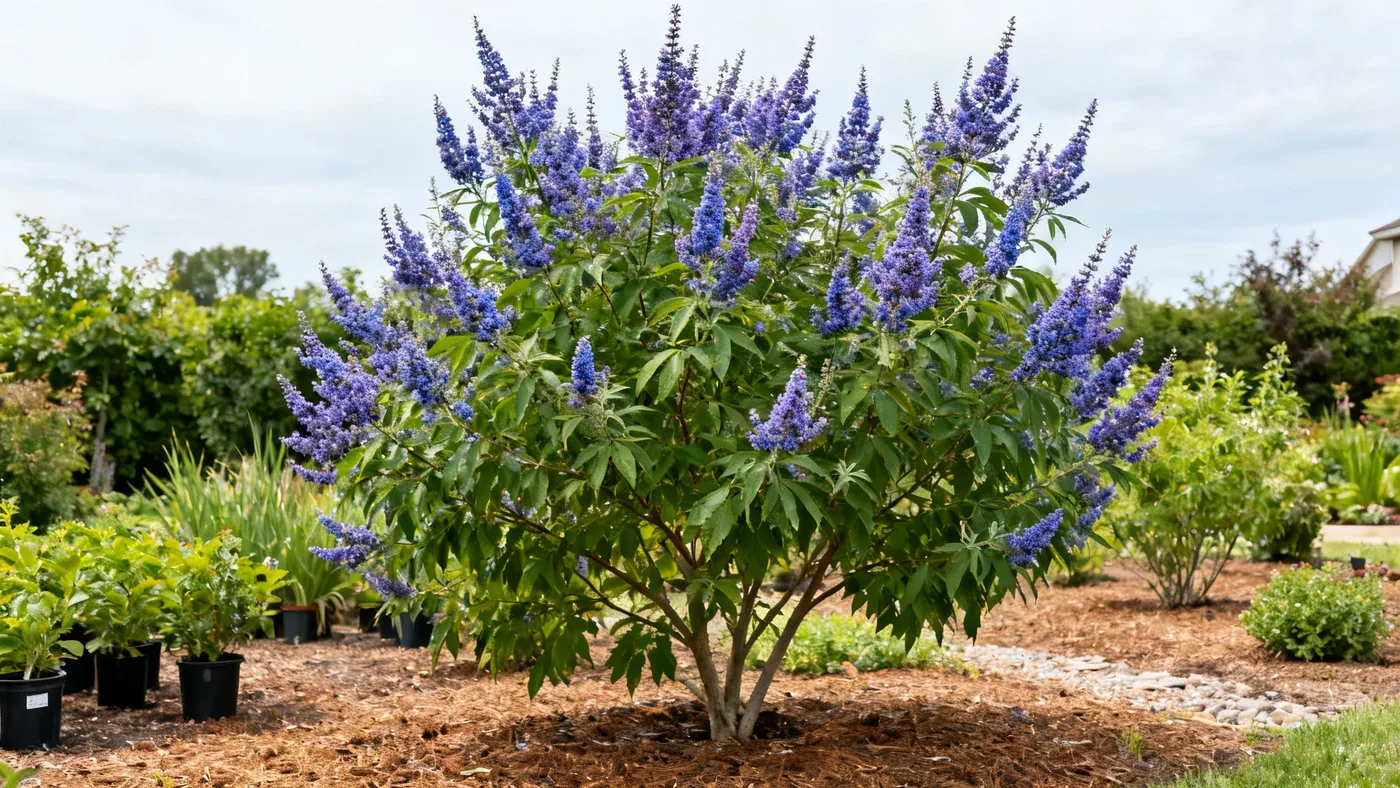
Why Is My Shoal Creek Chaste Tree Not Blooming?
A healthy Shoal Creek Chaste Tree should reward you with weeks of lavender-blue flowers from late spring through summer. When your tree stays leafy but bloomless, something is preventing it from reaching its flowering stage. The good news: most bloom failures are fixable, and your tree will recover quickly once you address the root cause.
Before You Troubleshoot: Know When Your Tree Should Bloom
Shoal Creek Chaste Tree typically flowers from May through September, with potential for rebloom flushes if you deadhead spent panicles. If your tree is younger than one year old, this waiting period is normal. Nursery-grown plants in quart or gallon containers often bloom in their first year from a cutting, but field-grown specimens may skip year one as they establish roots. Plants that are 2 to 3 years old should be fully established and flowering reliably.
In zones 6 and 7, winter dieback is common and can delay or eliminate the bloom season. If your tree dies back to the ground, new stems will still emerge and flower the same year, though bloom may come later in summer. Zones 8 and 9 see fuller, less interrupted growth and earlier, longer bloom seasons.
The Five Main Reasons Shoal Creek Chaste Tree Doesn't Bloom
Most non-blooming chaste trees fail for one of these five reasons. Work through them in order, starting with the easiest to assess and fix.
1. Insufficient Sunlight
This is the most common culprit. Shoal Creek Chaste Tree requires full sun, at least 6 hours of direct sunlight daily, to set flower buds. Even 6 hours is a minimum; 8+ hours produces fuller, more vigorous bloom. In part shade, plants will grow foliage aggressively but flower poorly or not at all. The tree may look healthy and green, which makes this easy to overlook.
How to diagnose: Observe where your tree grows during a clear day. If it receives direct morning sun but shifts to dappled shade by afternoon, or if a nearby structure, fence, or canopy casts shadow across it during peak summer sun (10 a.m. to 4 p.m.), sunlight is likely the problem.
How to fix it: If your tree is young (under 3 years), relocate it to a sunnier spot before it becomes too large. Spring or fall are the best seasons to move a young, established chaste tree. Bare-root winter moves work for dormant specimens in zones 6 and 7. For a mature or well-established tree, prune back surrounding vegetation that shades it, trim lower branches of nearby trees or remove shrubs blocking afternoon sun. This single change often triggers bloom within the next season.
2. Winter Damage or Lack of Pruning
Shoal Creek Chaste Tree blooms on new wood, meaning flowers form on branches that grew in the current year. If you don't prune hard each late winter or early spring, old wood accumulates, becomes woody and thick, and produces fewer flowering shoots. Cold damage in zones 6 and 7 can kill back portions of the tree, and if you leave dead or damaged wood unpruned, the tree wastes energy trying to heal rather than pushing new, flower-bearing growth.
How to diagnose: Look at the overall structure of your tree. Is it dense and tangled, with thick branches that haven't been pruned in years? Do you see sections of gray, brittle-looking branches mixed with living wood? After a hard winter, do the lower stems appear alive (green under the bark when scratched) while upper branches are dead?
How to fix it: Prune aggressively in late February or early March, before new growth emerges. This is the critical window. Cut back the entire plant by one-third to one-half its height and width. Don't shy away from this heavy cutting, Shoal Creek Chaste Tree responds well to hard pruning and will fill back in with vigorous new growth. Use sharp loppers or a saw. Remove all dead wood to bare living wood. If winter killed large sections of the tree, cut those branches back to the nearest living branch or down to 6 inches from the ground. Within 4 to 6 weeks, you should see new growth emerge along the cut stems.
Once the tree is in better shape, return to annual hard pruning every late winter. This habit is non-negotiable if you want consistent blooms. Mark it on your calendar now: late February or early March, every year.
3. Overwatering or Poor Drainage
Shoal Creek Chaste Tree is tolerant of poor, rocky soil but intolerant of soggy or waterlogged conditions. When soil stays wet, roots struggle to access oxygen and are prone to root rot. An overwatered or poorly drained tree will often display yellow or wilting foliage even though water is abundant. It may push weak, leafy growth instead of flowers.
How to diagnose: Examine the soil around your tree. Is it heavy clay that stays wet days after rain? If you dig a small hole near the base and let it sit, does water pool or drain within a few hours? Press gently on the lower trunk or root collar. If the wood feels soft, spongy, or smells rotten, root damage is likely already underway.
How to fix it: If your tree is in heavy clay or sitting in a low spot where water collects, you have two options. For a young tree (under 2 years), relocate it to a raised bed or mound of amended soil. For an established tree, improve drainage where it stands. Work coarse sand or aged compost into the top 2 to 3 inches of soil around the base (stay 6 inches away from the trunk). If the tree is in a pot and waterlogging is the issue, ensure the container has drainage holes and use a potting mix rated for well-drained soil, not a dense, moisture-holding mix.
Going forward, water your established tree only when the top inch of soil feels dry to the touch. In most climates, once the tree is rooted in the ground (after its first summer), natural rainfall is sufficient. Water newly planted trees regularly their first year to establish deep roots, but back off in year two and beyond.
4. Over-Fertilizing
Shoal Creek Chaste Tree is a light feeder. Too much fertilizer, especially nitrogen-heavy formulas, pushes lush foliage at the expense of flowers. You may end up with a very green, bushy tree that refuses to bloom.
How to diagnose: If your tree was vigorous in foliage last year but produced no or very few flowers, and you applied fertilizer or planted it in a newly enriched garden bed, over-nutrition is worth considering. This is less likely to be an issue if your tree is in poor or sandy soil.
How to fix it: Stop fertilizing, or apply only a balanced, slow-release formula in early spring. A light application is all you need, a single handful scattered around the base once per year in early April is sufficient. Avoid high-nitrogen blends marketed for "leafy plants." If your tree is in a very rich, amended bed, you may not need supplemental fertilizer at all. Shoal Creek Chaste Tree actually prefers modest soil conditions. If the tree looks vigorous and green overall, it has what it needs.
5. Disease or Pest Damage Weakening the Plant
Occasionally, pests or root rot slow down the tree enough that it doesn't have energy to flower. Spider mites are most common in hot, dry conditions; whiteflies appear occasionally. Leaf spot fungus is cosmetic but indicates stress. Root rot from waterlogging weakens the whole plant.
How to diagnose: Inspect the undersides of leaves for tiny webbing (spider mites) or sticky residue (whiteflies). Check for brown, dead patches on leaves. If the tree was previously blooming but has declined, root rot or pest pressure may be the reason.
How to fix it: For spider mites in hot weather, increase air circulation by thinning interior branches and water the foliage in early morning to discourage mites. For whiteflies, prune off heavily infested stems and monitor. Most infestations on established, healthy trees are minor and resolve on their own. For root rot, the remedy is preventing waterlogging (described above). Once root rot is extensive, recovery is slow; focus on improving drainage and reducing watering immediately.
Step-by-Step Recovery Plan
If your tree has multiple problems (poor sun, dense old growth, waterlogged soil), here's how to address them in order:
- Assess sunlight first. If your tree gets less than 6 hours of direct sun, plan to relocate it in late fall or early spring. A sunnier location is non-negotiable for reliable bloom.
- Prune in late February or early March. Cut back one-third to one-half the plant's size. Remove all dead wood. This step must happen before new growth emerges.
- Check soil drainage. Feel the soil 3 inches down near the base. If it's wet or compacted, work in sand or compost in the top few inches to improve drainage. Never fertilize at this time.
- Water only when needed. For established trees, withhold water unless the top inch of soil is dry and the tree shows light wilting. Reduce frequency as the season progresses.
- Deadhead through summer. As spent flower panicles brown, snip them off just below the flower cluster. This redirects energy into new blooms. Rebloom flushes may appear by mid-summer.
- Expect results by next season. If you made major changes (relocated the tree, removed shade, pruned hard), flowering should return within 8 to 12 months. For minor adjustments like deadheading, expect rebloom within weeks.
Tips to Prevent Future Bloom Failures
- Mark your calendar for late February or early March every year to prune. Hard pruning is the most reliable way to maintain flowering Shoal Creek Chaste Trees.
- Plant new trees in full sun from the start. Don't assume a younger, smaller tree will succeed in part shade.
- Deadhead every 2 to 3 weeks during the blooming season. This simple habit extends the bloom period and often triggers a second flush of flowers.
- Mulch lightly around the base in late fall (not touching the trunk). A 2-inch layer of aged compost helps regulate soil moisture without creating a soggy environment.
- In zones 6 and 7, expect some winter dieback. It's normal and not a sign of failure. New growth will emerge in spring and flower the same year.
- If your tree flowered last year but not this year, and you made no changes to sun, drainage, or pruning, check for spider mites during hot, dry spells.
When to Seek Help or Replace
If your tree displays extensive soft wood, a strong rotten smell, or remains completely leafless even in late spring, root rot has likely progressed too far for recovery. In this case, removing and replacing the tree with a new specimen planted in better conditions is often the most practical path forward.
For detailed guidance on caring for a healthy Shoal Creek Chaste Tree year-round, see Shoal Creek Chaste Tree Care: The Complete Growing Guide.
Bloom Troubleshooting Quick Reference
| Problem | Signs to Look For | Fix | Expected Timeline |
|---|---|---|---|
| Insufficient sunlight | Tree gets less than 6 hours direct sun; neighbors look bloomy; growth is lush and green | Relocate to full sun or remove shade sources | 8-12 months after relocation |
| No recent pruning | Dense, tangled branch structure; thick old wood; no new growth being made | Hard prune in late Feb/early Mar, cutting back 1/3 to 1/2 size | Blooms appear same summer, 4-6 weeks after new growth emerges |
| Winter dieback (zones 6-7) | Dead or gray upper branches; living wood only near the base | Cut back all dead wood to living tissue; prune in early spring | Blooms July-September same year |
| Poor drainage / wet soil | Soil stays wet days after rain; yellow foliage; soft lower trunk | Relocate to raised bed or improve drainage with sand/compost; reduce watering | Recovery takes 1-2 seasons; may see some bloom if root damage is minor |
| Over-fertilizing | Lush green foliage; no flowers; tree is vigorous but won't bloom | Stop fertilizing or use light balanced formula in early spring only | Bloom resumes next season |
| Spent flowers not removed | Brown, dried flower panicles still attached to branches | Deadhead spent flowers every 2-3 weeks during bloom season | Rebloom within 3-4 weeks |
| Spider mites (hot/dry weather) | Fine webbing on leaves; stippled yellow appearance; leaves drop early | Improve air circulation via pruning; water foliage in early morning | Mites subside in weeks; bloom continues once damage is controlled |