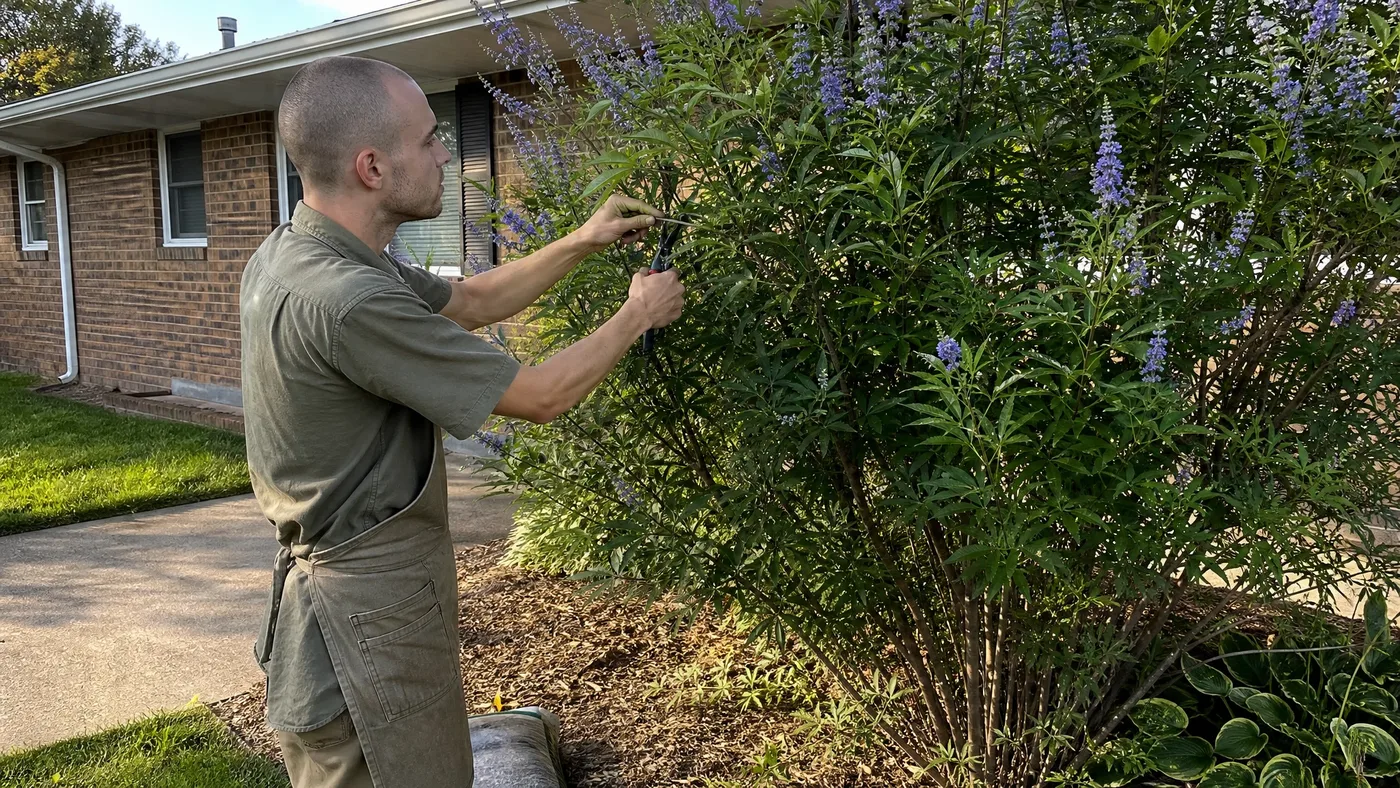
How to Propagate a Shoal Creek Chaste Tree from Cuttings
A single green shoot, snipped and lying on a potting bench, doesn't look like much. Yet a stem this small already holds the instructions for a whole new shrub, down to the long violet-blue flower spikes that set Shoal Creek apart from the typical species.
Early summer is when this job becomes urgent. The new shoots are at the right stage for only a short stretch, and if you miss it you wait for dormant wood or for next year. Done well, one healthy shrub gives you as many matching plants as you have room to pot.
This guide covers everything you need to know about propagating a Shoal Creek chaste tree, from choosing the parent stem and taking softwood cuttings to rooting hardwood over winter and starting seed.
Why Cuttings Copy a Shoal Creek Chaste Tree Exactly
Start with two definitions. A clone is a new plant grown from a piece of an existing plant, so it carries the same genetic instructions as its parent. A cultivar is a plant selected for traits worth keeping, and cloning is how those traits are kept. Shoal Creek is a cultivar, and Clemson's extension says it was first introduced in 1983.
Think of seed as dealing a new hand from a shuffled deck. Each seed combines genes from two parents, so the hand is never quite the same twice. A cutting is closer to a photocopy: nothing gets shuffled. The new plant has the same flower spikes, the same upright, vase-shaped habit and the same mature size as the shrub you cut it from.
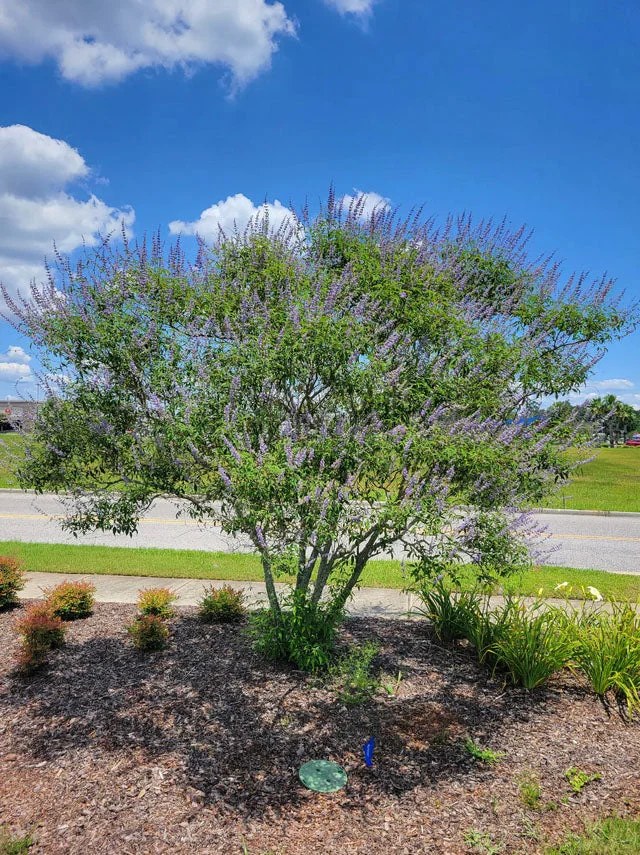
That size matters when you plan where the copies will go. Shoal Creek reaches 10 to 15 feet tall and 15 to 20 feet wide, and it grows rapidly. The University of Florida extension confirms that vitex can be reproduced by cuttings, and for a cultivar that is the method we recommend. Seed is a gamble, and we cover why in the last method below.
Gathering Tools, Media and a Healthy Parent Plant
Set everything out before you cut a single stem, because a cutting starts losing moisture the moment it leaves the parent. Here is the kit we use:
- Sharp bypass pruners, wiped clean before you start so you do not carry disease from one plant to the next.
- Rooting hormone in powder or gel form. It is not strictly required, but it speeds and evens out rooting.
- A light, sterile rooting mix, such as perlite blended with peat-based mix or coarse sand.
- Small containers with drainage holes, plus a clear dome or a plastic bag and a few stakes to hold it up.
- Plant labels and a pencil that will not fade.
Why the Mix Matters
Chaste tree is a plant of loose, well-drained soil. The University of Arkansas extension notes that the only real trouble it has is root rot in heavy clay soils. A cutting has no real roots to cope with soggy conditions, so garden soil or dense potting mix is a poor choice. Our soil and drainage guide explains the same principle for the finished plant.
Choosing the Donor Stem
Pick a parent that is healthy, vigorous and known to be Shoal Creek, not a seedling that happened to sprout nearby. Look for straight, current-year shoots with good leaf color and no insect damage or spots. Skip stems that already carry flower spikes, since they put their energy into bloom instead of roots.
Water the parent deeply the day before so the stems are full of moisture. If you prune the shrub in late winter, as our pruning guide describes, the strong regrowth it sends up by early summer is ideal cutting material.
Taking Softwood Cuttings in Early Summer
Softwood is the current season's growth while it is still young and flexible. It is the stage when chaste tree roots most readily for us, and it arrives in early summer, right as the shrub begins to bloom, which starts in June. Do the work in the morning, when the stems are fullest.
Recognizing Softwood
Bend a shoot sharply. Softwood snaps cleanly with a crisp sound. If it only bends, it is too young and will wilt before it roots. If it is stiff and bark-covered at the base, it has moved on to semi-ripe wood, which roots more slowly.
Where to Cut
A node is the point on a stem where a pair of leaves attaches. Roots form most easily just below a node, so make the bottom cut there with a clean, straight slice. Take a piece with several nodes, cutting the tip above a node so the shoot is not left with a dead stub.
Collect more cuttings than you need. Not every one will root, and a few extras cost the parent nothing. Drop each into a plastic bag with a little dampness and keep the bag in shade until you are ready to work.
Stripping the Leaves
Shoal Creek's leaves are divided into several narrow leaflets that fan out from one point. Remove all the leaves from the lower half of each cutting, since any buried in the mix will rot. On the leaves you keep, snip the leaflets back by about half. This cuts moisture loss while leaving enough surface to feed the cutting.
Preparing and Sticking Each Cutting in Its Medium
Work with one cutting at a time and never let the cut end dry out. Moisten the mix first so it is damp like a wrung-out sponge, then fill your containers and tap them so the mix settles without being packed down. Then follow these steps for each cutting:
- Poke a hole in the mix with a pencil. This keeps the rooting hormone from being scraped off as you insert the stem.
- Dip the bottom inch or so of the cutting in water, then in the hormone, and tap off the excess. A thick coating does more harm than good.
- Slide the cutting into the hole so at least one node sits below the surface and the stripped portion is buried.
- Firm the mix around the stem with your fingers so it makes full contact with the cut end and the stem stands upright.
- Water gently from above to settle the mix, then let the pot drain.
- Label each pot with the plant name, the date and the parent shrub it came from.
Leave space between cuttings so the leaves do not touch. Touching leaves hold moisture against each other and invite mold. Several cuttings can share a wide pot, as long as air can move between them.
Keeping Humidity Up While Roots Form
A cutting has no roots to drink with, yet its leaves keep losing water. The whole job of this stage is to slow that loss until roots form. That is the reason for the dome.
Setting Up the Humid Chamber
Cover the pots with a clear dome or a plastic bag held up by stakes so the plastic does not rest on the leaves. Set the pots in bright, indirect light. Direct sun turns a closed dome into an oven, and a cooked cutting looks just like a thirsty one. Early summer's natural warmth is enough, and we find that warmth under the pots helps more than extra light.
Lift the cover briefly every few days to let fresh air in and check the mix. Keep it damp but never soggy, and pick off any leaf that yellows or drops before it starts to mold.
Telling When Roots Have Formed
Give the cuttings several weeks before you look closely. The best sign is new leaf growth at the tip, because a cutting will not push growth without roots to support it. You can also tug a stem very gently. Resistance means roots are gripping the mix. Roots poking out of the drainage holes are the clearest sign of all.
One of the most common questions we get is whether it is safe to pull a cutting up to check. It is not. Lifting a cutting every few days tears the delicate new roots, and we see more cuttings lost to impatience than to anything else.
Weaning Off the Dome
Once rooted, open the cover for longer each day over a week or so, then remove it. Move the young plants into brighter light gradually and pot each into its own container with ordinary, well-drained potting mix.
Hardwood Cuttings From a Dormant Shoal Creek Chaste Tree
Hardwood cuttings are the slow, low-effort alternative. You take them in the dormant season, after the leaves drop, from wood that matured during the summer. There is no dome and no leaf stripping, since there are no leaves, but rooting takes most of the winter, and you need patience.
Cutting and Bundling
Choose firm, pencil-thick shoots from this year's growth and cut pieces long enough to carry several nodes. Make a straight cut at the bottom, just below a node, and a slanted cut at the top, just above one. The slant tells you which end is up once the pieces are mixed. Scratch the bark of one piece and look for green. Brown wood is dead, and this is the check that matters most in colder parts of the range, where stems can die back. Our winter care guide covers that dieback in detail.
Tie the pieces into small bundles with the bottoms together and label them. Bury the bundles upright, bottom end down, in damp sand or a trench of loose, well-drained soil, in a cool, sheltered spot that does not freeze solid. Callus (a pale, scabby layer of healing tissue) forms over winter, and roots grow from it as the soil warms in spring.
Choosing a Method
This table compares the three ways to get a new plant, so you can match the method to your time and your goal:
| Method | When | Effort | True to Shoal Creek? |
|---|---|---|---|
| Softwood cuttings | Early summer, on green shoots | High, needs a dome and regular checks | Yes, a clone |
| Hardwood cuttings | Dormant season, on leafless wood | Low, but slow | Yes, a clone |
| Seed | After the fruit ripens | Low | Not guaranteed |
Starting Seed and What a Shoal Creek Chaste Tree Seedling Changes
NC State describes the fruit as a drupe with 4 cells, each containing 1 seed. Those small seeds are what the species uses to spread, and starting them is easy if you follow a few steps:
- Collect the dried fruit from a mature shrub once it has hardened and browned, then rub it apart to free the seeds.
- Sow in a damp, well-drained seed-starting mix and press the seed in lightly, since it needs only a thin covering.
- Keep the tray warm and bright, and keep the mix damp but never wet.
- Expect slow, uneven germination. Your local extension service can tell you whether seed treatment helps in your region.
- Pot seedlings individually once they have their first true leaves.
Why a Seedling Is Not a Shoal Creek
Here is the caveat that matters. Shoal Creek sets little seed compared with the typical species, which "freely reseeds and can become weedy". The cultivar is distinct from that species, and the seedlings reshuffle the genes. They may bloom with smaller spikes or in a duller color, and they may not keep the low seed set that makes the cultivar tidy.
The common advice is that chaste tree is so easy from seed that you should just let it self-sow. We disagree if you want a Shoal Creek. Grow seedlings only if you do not mind surprises, and treat them as plain chaste trees until they flower.
Shoal Creek Chaste Tree Cuttings Reward a Patient Hand
The stages run in order. Choose a vigorous parent, take softwood cuttings in early summer, strip and dip them, stick them in damp mix, and hold the humidity until new leaf growth appears. A rooted cutting is ready to move when roots fill its pot or show at the drainage holes. Hardwood cuttings follow the same path on a slower clock, ready to pot in spring.
Before any of them goes into the ground, plan for the mature size and read our planting guide. Then picture the end of the job: a rooted young plant tucked into its first pot. Label it as a cutting-grown clone, and note which parent it came from.
Shoal Creek Chaste Tree
Nursery-grown Shoal Creek Chaste Tree in sizes from QT Container 6-8 Inches Shrub Form, shipped to your door.
From $49.49
Shop Now →Shoal Creek is a plant we know well from the first flower spikes of June onward, and it grows in our rows under full sun with loose soil that sheds water quickly. Everything we ship, from top-quality shrubs to the plants you might root from cuttings, comes out of those same rows. Whenever your cuttings have taken and you are ready to plant, come and see what we have grown.