10 Landscape Design Ideas for Shoal Creek Chaste Tree
Shoal Creek Chaste Tree (Vitex agnus-castus 'Shoal Creek') is a versatile performer in the landscape. Its fast growth, prolific lavender-blue flowers, and adaptable nature make it work in a range of settings. Whether you're designing a butterfly garden, a low-water landscape, or a mixed border, this plant offers practical solutions rooted in years of growing experience across zones 6-9. The key is understanding how to place it and what to pair it with to get the most out of its strong visual and ecological presence.
1. Specimen Tree for a Pollinator Garden
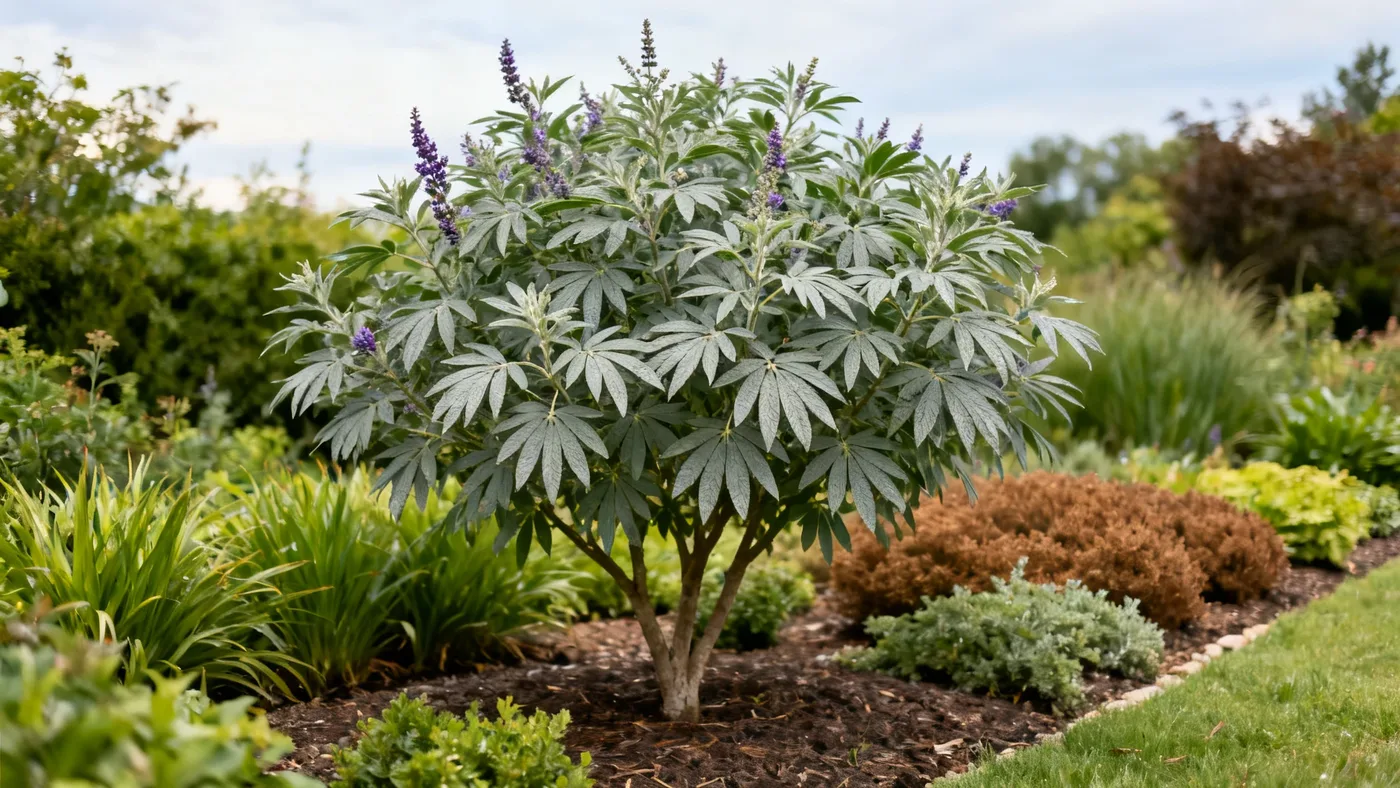
Place a single Shoal Creek Chaste Tree as the focal point of a dedicated pollinator garden. Growing 10-15 feet tall and equally wide, it creates a substantial anchor that draws bees, butterflies, and hummingbirds from late spring through summer. The lavender-blue flower panicles bloom continuously from May through September, especially if you deadhead spent blooms, giving pollinators a reliable nectar source across the entire season.
Site it where it receives full sun (6 or more hours daily) and surround it with lower herbaceous plants like salvias, bee balm, and native wildflowers that bloom at different times. Space companion plantings 3-4 feet away to avoid competing for water during establishment. The specimen approach works best in yards where you want a showstopper that also serves an ecological role.
Practical takeaway: Deadhead faded flower panicles weekly during peak bloom to trigger rebloom flushes and keep pollinators visiting through late summer.
2. Layered Shrub Border with Ornamental Grasses
Combine Shoal Creek Chaste Tree with ornamental grasses and other medium shrubs to create depth and movement in a mixed border. The upright, twisting branch structure provides winter silhouette interest when paired with the vertical texture of muhly grass, fountain grass, or tall fescue. The contrast between the delicate compound foliage and bold grass forms creates visual intrigue even when the chaste tree is not in bloom.
Plant the chaste tree toward the back of a border (roughly 10-12 feet apart if massing multiple plants) and layer shorter salvias, lantana, and catmint in front. Since Shoal Creek grows roughly 2-3 feet per year, it will fill its intended space within a few years. The soft gray-green foliage of the chaste tree's palmately compound leaves complements the silvery tones of many ornamental grasses beautifully.
Practical takeaway: Choose grasses that share the full-sun requirement and drought tolerance; they will mature faster than the young chaste tree and create immediate structure while it grows in.
3. Informal Flowering Hedge or Screen
Use Shoal Creek Chaste Tree as an informal flowering hedge to screen views or create a boundary without the rigid formality of a clipped evergreen. Space plants 8-12 feet apart, depending on how quickly you want to achieve screening. The fast growth rate means a 6-foot screen is achievable in 3-4 years under good conditions. Unlike formal hedges, this plant thrives on a light annual prune rather than frequent shearing.
Prune hard in late winter or early spring before new growth emerges, cutting stems back by a third to half their length. This encourages a fuller, bushier form and maximizes the bloom flush that follows. The deciduous nature means winter screening is limited, but the open branch structure still softens views during dormant months. In zones 6-7, winter dieback may occur in harsh years, but the plant reliably resprouts from the base.
Practical takeaway: Always prune before growth starts in spring; pruning chaste tree in summer or fall reduces the following year's bloom.
4. Xeriscape or Low-Water Landscape Anchor
Shoal Creek Chaste Tree is a powerhouse for water-wise landscapes. Once established (roughly the first year), it tolerates low to moderate water and adapts to most well-drained soils, including poor and rocky sites. It refuses waterlogged or soggy conditions, so drainage is non-negotiable, but it thrives in the lean, dry soils that challenge many ornamentals.
Pair it with other drought-tolerant plants: lavenders, catmint, sedums, yarrow, and Mediterranean herbs. The combination reduces the total irrigation load and creates a cohesive visual style. Mulch lightly to retain soil moisture during the establishment period, then reduce mulch as the tree matures. In regions with moderate to high rainfall, this combination still works; just ensure drainage is excellent to prevent root rot.
Practical takeaway: Water regularly during the first growing season; drought tolerance kicks in once roots are established, typically by year two.
5. Mixed Container Planting (While Young)
Shoal Creek Chaste Tree starts life as a manageable shrub in quart or gallon containers, making it suitable for container planting during its first few years. Combine a young plant with trailing sedums, silvery dusty miller, and textural annuals in a large pot (18-24 inches wide) for a seasonal mixed container display. The plant remains compact enough to move or relocate during this phase if needed.
Containers require consistent watering and a quality potting mix with excellent drainage. As the tree grows and roots fill the pot, you will need to transplant it to increasingly larger sizes or move it to the landscape within 2-3 years. Container culture works well for trial plantings or for gardeners who want to delay landscape installation while the tree develops structure.
Practical takeaway: Plan for landscape transplanting before the tree outgrows its container; moving from a container to in-ground in spring (in colder zones) or fall gives the strongest establishment.
6. Butterfly Garden Centerpiece
The prolific lavender-blue blooms of Shoal Creek Chaste Tree are a butterfly magnet, making it an ideal centerpiece for a butterfly garden. Monarchs, swallowtails, and countless smaller butterfly species visit the open flower panicles throughout the long bloom season. The plant's vigor means it can anchor a larger garden layout without being overwhelmed by companion plants.
Surround it with native milkweed, coneflowers, asters, and zinnias to extend the bloom season and provide host plants for caterpillars. Include native trees and shrubs for roosting and pupation sites. The chaste tree's open branch structure and lightly fragrant flowers create an inviting habitat. Avoid pesticides entirely; insects and small predators are part of the design.
Practical takeaway: Plant your butterfly garden in a location visible from windows or seating areas; the constant activity is one of the greatest rewards.
7. Four-Season Mixed Border with Structural Interest
Layer Shoal Creek Chaste Tree into a mixed border where deciduous shrubs, evergreens, and perennials provide interest across all four seasons. The chaste tree delivers lavender-blue flowers from late spring through summer, then recedes gracefully as deciduous companions take center stage. Its twisting branch silhouette adds subtle winter interest when broader structural plants have faded.
Combine it with evergreen framework shrubs (boxwood, ilex, or cleyera) for year-round bones, and seasonal performers like Russian sage, crepe myrtle, and ornamental grasses for layered color and texture. This approach creates a sophisticated border that never looks bare and makes the chaste tree feel like a natural part of a cohesive design rather than a standalone specimen.
Practical takeaway: In a mixed border, prune the chaste tree to maintain an open form so evergreens and winter-interesting plants remain visible.
8. Coastal or Salt-Tolerant Landscape
Shoal Creek Chaste Tree demonstrates moderate salt tolerance, making it a viable option for coastal gardens or landscapes near salted roadsways. While not rated as highly salt-tolerant as some shore plums or beach roses, it handles occasional salt spray and winter road salt better than many ornamental shrubs. This makes it useful in seaside communities or properties where salt exposure is a limiting factor.
Pair it with other salt-tolerant companions like santolina, artemisia, and native coastal grasses. Avoid planting directly in the salt spray zone (the immediate oceanfront); place it 30-50 feet back where it still benefits from the marine air without direct exposure. Ensure drainage is excellent to prevent salt accumulation in the soil.
Practical takeaway: If salt exposure is heavy, rinse foliage with fresh water in spring to remove accumulated residue and prevent leaf damage.
9. Multi-Stem Form for Visual Drama
Allow Shoal Creek Chaste Tree to develop as a multi-stem shrub rather than training it to a single trunk. This form showcases the elegant, twisting branch structure and creates a more dramatic sculptural presence. The multiple stems also distribute flowering more visually across the entire plant, creating a fuller flower display than a single-trunk specimen.
To encourage multi-stem development, plant young trees and prune the central leader lightly in the first year, allowing side branches to develop equally. The natural growth habit of the cultivar leans toward a spreading, multi-stemmed form, so minimal intervention is needed. This approach works beautifully in contemporary or naturalistic landscapes where the raw structure of the plant is part of the design.
Practical takeaway: Do not stake or force a chaste tree into a single-stem tree form; its naturally spreading habit is one of its greatest design assets.
10. Deer-Resistant Perimeter Planting
Shoal Creek Chaste Tree's pungent, sage-like aromatic foliage makes it highly deer resistant, making it an excellent choice for landscape perimeters or properties in high-deer-pressure areas. Its combination of deer resistance, drought tolerance once established, and visual impact makes it a practical boundary planting that reduces pressure on more tender plants.
Use it as part of a mixed hedge or screen on property lines, paired with other deer-resistant shrubs like lilacs, Russian sage, and viburnums. The psychological barrier created by a flowering screen is as valuable as the physical one, and browsing pressure on interior plantings often decreases when deer know a deterrent exists. Spacing at 8-12 feet allows a closed screen within a few years without overcrowding.
Practical takeaway: Combine deer-resistant plants in a layered planting; monoculture hedges attract deer testing; diversity discourages them.
Quick Reference: Shoal Creek Chaste Tree Landscape Planning Chart
| Design Use | Spacing | Sun Requirement | Mature Size (Years 3-5) | Water Needs |
|---|---|---|---|---|
| Specimen / Focal Point | Single plant | 6+ hours daily | 10-15 ft H & W | Low to moderate (after Year 1) |
| Hedge / Screen | 8-12 ft apart | 6+ hours daily | 10-15 ft H, 8-12 ft W | Low to moderate (after Year 1) |
| Mixed Border | 10-12 ft back row | 6+ hours daily | 10-15 ft H & W | Low to moderate (after Year 1) |
| Container (temporary) | Single 18-24 in. pot | 6+ hours daily | 2-4 ft (in container) | Regular during growing season |
| Xeriscape / Low-Water | 10-12 ft apart | 6+ hours daily | 10-15 ft H & W | Low (after Year 1) |
Know Your Zones and Bloom Windows
Shoal Creek Chaste Tree thrives in USDA zones 6-9. In zones 6-7, expect occasional winter dieback in the coldest years, but the plant reliably resprouts from the base. For guaranteed performance in colder regions, site it in the warmest microclimate available: south-facing walls, protected corners, or slightly elevated ground where cold air drains away. The plant blooms reliably from May through September across its range, with heaviest flowering in June and July. Deadheading extends rebloom cycles through late summer.
For more detailed care information, see our complete growing guide. If your plant is not blooming as expected, insufficient sunlight is the most common culprit; read why your chaste tree is not blooming for troubleshooting steps.