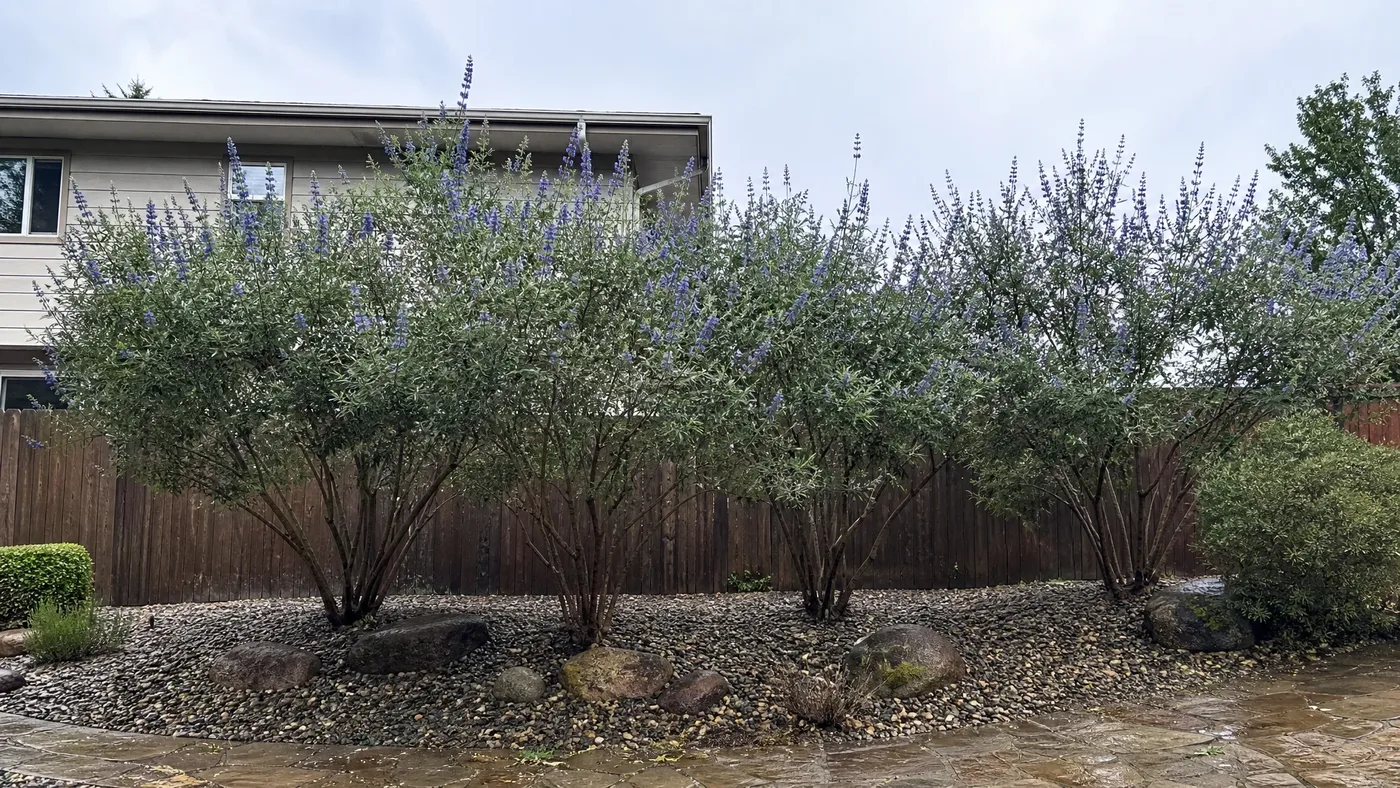
Shoal Creek vs Other Chaste Tree Varieties: What to Know
One late July, years back, we walked a nursery row where four chaste tree cultivars stood in bloom shoulder to shoulder, and each one showed a slightly different blue, so that the whole row looked like a paint chart someone had planted.
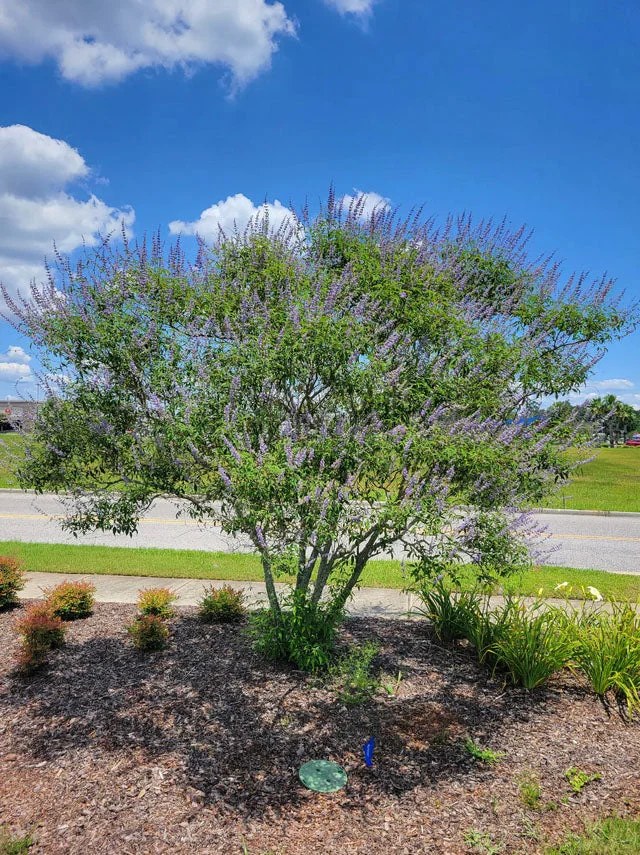
That row is the whole buying decision in miniature. Cultivars that share one common name can differ by around 20 feet in mature height, and a wrong pick means a shrub that overruns its bed or one that never fills it.
This article talks about how Shoal Creek compares with Delta Blues, Flip Side, Blue Diddley and Montrose Purple on flower color, size, seed set, hardiness, form and upkeep, and answers the questions customers ask us most. Read on to learn which cultivar fits your yard and which one we would choose.
Flower Color in the Shoal Creek Chaste Tree Row
Lay the cultivars side by side in July and the differences are real but small. Shoal Creek runs violet-blue, and its spikes are larger than those of the typical species, at 12 to 18 inches long. Length does more for the show than shade does, because long spikes are what you read from the street in August.
Delta Blues sits at the deep end, with dark purplish-blue blooms in compact panicles, so it looks heavier and richer up close. Blue Diddley goes the other way with lavender-blue flowers, the lightest of the group. Montrose Purple is listed with blue flowers on a very tall plant, and despite the name we would not promise you a purple one.
Flip Side is the cultivar we cannot rank here. The extension sources we trust give no color description for it, and we would rather say so than guess, so read the tag and, if you can, see it in bloom before you buy. For the longer story on timing and shade, our bloom time and flower color guide goes further.
Color verdict: Shoal Creek is our choice for a clear, cool blue that carries across a lawn. Take Delta Blues if you want the darkest flower, and Blue Diddley if pale lavender suits a small bed better.
How Tall Each Cultivar Stands by August
Size is where these cultivars part company most, and it is the criterion we would settle first. The table sets the figures we can source side by side, with gaps left where the sources are silent.
| Cultivar | Mature height | Mature width |
|---|---|---|
| Shoal Creek | 10–15 feet | 15–20 feet |
| Delta Blues | 8–10 feet | 8–10 feet |
| Blue Diddley | 3–6 feet | 3–6 feet |
| Montrose Purple | Up to 25 feet | Not listed |
| Flip Side | Not listed | Not listed |
Shoal Creek is the big one among the cultivars with firm numbers. It reaches 10 to 15 feet tall and 15 to 20 feet wide, while the full range runs 4 to 15 feet tall and 4 to 12 feet wide, and growth is rapid. With a gap that wide, we plan for the larger spread and let pruning hold it back if needed.
The species shows you the ceiling. Virginia Tech lists a large shrub to 15 feet, occasionally a small tree to 20 feet, with equal spread, and Montrose Purple is the tall form. Delta Blues is the compact answer, and Blue Diddley is the only one here we would call a true small-yard shrub.
Size verdict: small yards belong to Blue Diddley or Delta Blues. Large yards, screens and the back of a border belong to Shoal Creek, and our guide to how big a Shoal Creek really gets covers the room it needs. Montrose Purple only makes sense where you have space for a tree.
Shoal Creek Chaste Tree Seed Set and Self-Sowing
One of the most common questions we get is whether a named cultivar is sterile. The honest answer is that none of the five is described that way in the extension sources we rely on.
The species is the problem child. It freely reseeds and can become weedy, and its dry fruit is a litter issue. Clemson warns that the possibility of reseeding means it can become invasive in some areas. Shoal Creek is a selection of that species, so we treat it as a plant that can set seed, not as a seedless one.
In practice the volunteers are manageable if you stay on top of them. Cut the spikes once the flowers fade and you do two jobs at once, since removing old blooms brings a repeat bloom in about six weeks. Pull any seedlings under the shrub while they are small, and ask your local extension service whether chaste tree is flagged as invasive in your state.
No source we have puts the seed habits of Delta Blues, Blue Diddley, Montrose Purple or Flip Side ahead of Shoal Creek's, so we will not pretend a rival cultivar solves the problem.
Sterility verdict: a tie. Do not buy on a promise of sterility unless the seller can document it, and deadhead whichever one you plant.
Winter Hardiness Where the Frost Bites
Cold is where the Shoal Creek listing is most generous. The cultivar grows in zones 6a through 9b, a wider band than the 7a to 8b of the plain species. Clemson is more careful, recommending the plant for zones 7 to 9 and noting that it dies back in zone 6 and colder.
Dieback is not the end of the story. Missouri State's horticulture notes say the species is more of a shrub in the north and may die back to the ground in cold winters. That matches what we tell customers: at the cold end of the range, treat it like a perennial, wait for new growth in spring, and cut the dead wood back to living tissue.
For the rivals, our sources give no zone listing for Delta Blues, Blue Diddley, Montrose Purple or Flip Side. A compact cultivar is not automatically a tougher one, and a 25-foot tree is no more cold-proof than its size suggests. Ask the seller for a documented zone before you plant any of them near the edge of its range.
Hardiness verdict: Shoal Creek, on the strength of a documented range that reaches 6a. If you garden in zone 6, read our hardiness zones guide before you commit.
Foliage and Form Once the Blooms Fade
Once the spikes are gone you live with the shrub for the rest of the year, so form matters. Shoal Creek's foliage resists leaf spot, and Oregon State describes the species as upright branching with a rounded form. The larger cultivars can also be grown as a large, vase-shaped shrub or trained into a small tree.
Delta Blues has more refined foliage, and at 8 to 10 feet tall and wide it makes a smaller, tidier mass than Shoal Creek. Blue Diddley, at 3 to 6 feet, stays a low shrub and will not make a screen. Montrose Purple, to 25 feet, behaves like a small tree.
In winter all of them drop their leaves, so the silhouette is branches only. A Shoal Creek shaped into a vase shows an open, sculptural frame against a fence, while a small shrub is closer to a cluster of twigs. The University of Georgia also lists fragrant foliage among the plant's virtues.
Year five is the real test. The species can grow rapidly, up to 24 inches a year, so on paper a Shoal Creek can be well over head height by then, and the form you shaped in years two and three is the one you will be looking at.
Looks verdict: Shoal Creek for presence, Delta Blues for polish.
Upkeep Through the Seasons on Shoal Creek Chaste Tree
The chore list is nearly identical across these cultivars, so the difference comes down to how much plant you have to reach. For Shoal Creek, the year runs like this:
- Late winter: cut out winter damage and dead wood, and set the framework you want for the season. Our pruning guide covers the cuts for bigger blooms.
- Early summer: deadhead the first flush of spikes as they fade, which brings a repeat bloom in about six weeks and keeps seed from dropping.
- Through summer: water young plants while they establish. The species has good drought tolerance once established, so do not keep a mature plant on a watering schedule.
- Fall: rake the leaves and pull any seedlings you find under the branches.
Soil is the one place a mistake costs you the plant. The University of Arkansas extension says that apart from root rot in heavy clay soils, chaste tree is not bothered by insects or disease, so loose, well-drained ground matters more than any spray.
Size changes the effort. A 3 to 6 foot Blue Diddley can be deadheaded from the ground, while a 10 to 15 foot Shoal Creek needs a ladder or a pole pruner for the top spikes, and a 25-foot Montrose Purple is beyond a ladder for most of us.
Upkeep verdict: Blue Diddley is the easiest keeper by size, with Delta Blues next. Shoal Creek is not far behind, and with leaf-spot-resistant foliage the work stays pruning and deadheading.
Shoal Creek Chaste Tree Holds Its Own for Most Buyers
Weigh the verdicts and Shoal Creek wins the criteria most buyers care about: the longest spikes, a documented hardiness range down to zone 6a, and a form that fills a sunny corner. It loses on size for small yards and ties on seed. Here is how we sort buyers.
The Big Sunny Yard
If you have the room, plant Shoal Creek and give it the full 15 to 20 feet of width. It makes a screen that carries bloom from June into September, and it can be limbed up into a small tree beside a patio. For a sunny yard with space, it is the one we would plant ourselves.
The Small Bed or Patio
Choose Blue Diddley if lavender-blue and 3 to 6 feet suits you, or Delta Blues if you want the deepest color at 8 to 10 feet. Both spare you the ladder, and both are far easier to fit than a 15-foot Shoal Creek.
The Colder Garden
Shoal Creek is the pick here because its range is documented to 6a. Expect dieback in a hard winter, be patient in spring, and let the new growth tell you where to cut.
The Buyer Who Wants a Tall Tree
Montrose Purple reaches 25 feet, so it needs real room, and you should ask the seller for its hardiness before you plant. Flip Side gets the same advice, because we have no sourced figures to give you. Once you have chosen, our guide to container sizes shows what to look for at the nursery.
Choosing Your Shoal Creek Chaste Tree by One Criterion
Color, size, seed set, cold, form and upkeep each have a different winner, which is why we say to rank them before you shop. Shoal Creek takes color for its clear violet-blue, hardiness for its documented range and presence for its form, while Blue Diddley and Delta Blues take size and upkeep, and no cultivar earns a promise of sterility.
By late September our own row is quiet, the last long spikes fading at the tips and the bees thinning out, and you can see which plants did what was asked of them. Pick the one criterion that matters most to you, whether that is size, cold or color, and let it choose your cultivar.
Shoal Creek Chaste Tree
Nursery-grown Shoal Creek Chaste Tree in sizes from QT Container 6-8 Inches Shrub Form, shipped to your door.
From $49.49
Shop Now →Shoal Creek does best in full sun with loose, well-drained soil, so that is how we raise it in our rows. We grow and sell top-quality shrubs from our own farms, and if comparing these varieties has you leaning toward Shoal Creek, we would be glad for you to begin with one of ours.